
There was a time when an indoor pool, a private gym, a wellness area or a cinema room was enough to set a luxury residential development apart. Including these facilities allowed a project to be presented as exclusive, placing it clearly above the conventional residential market.
However, the market has evolved.
Many of the spaces once considered exceptional are now standard features in numerous high-end developments. As a result, the conversation can no longer focus simply on explaining what amenities are or counting how many a residential community offers. The more important question is: what value do those amenities bring to the people who will use them?
The new approach to residential luxury is about more than adding services or repeating the same formula across every project. It means understanding how owners live, what they expect from their homes and how their surroundings can help them enjoy a more comfortable, balanced life that reflects their individual preferences.
At RH Privé Estates, we believe that planning a development should begin with understanding the people who will live there. Only with that understanding is it possible to design communal areas, services and management models that truly meet their expectations.
Because the future of luxury lies in creating better residential experiences, rather than simply offering more amenities.
What are amenities in a residential development?
In residential property, the term “amenities” refers to the facilities, shared spaces and services that complement the homes within a development.
When someone asks what amenities are, the simplest answer might include swimming pools, gyms, gardens, coworking spaces, sports facilities or wellness areas. However, this definition is becoming increasingly limited.
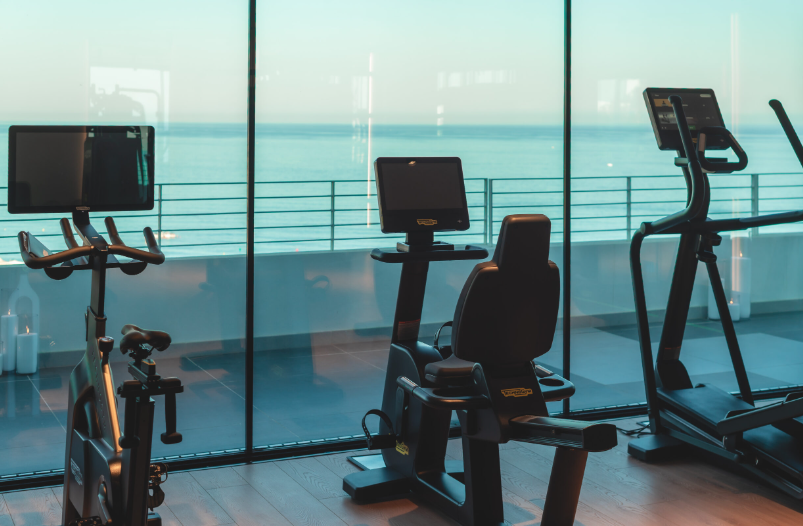
Amenities are more than physical spaces. They can also include concierge services, personalised assistance, property management, activities for residents, wellness programmes or experiences inspired by the hospitality sector. Their purpose is to improve everyday life, make certain routines easier and strengthen the connection between the home, the community and its surroundings.
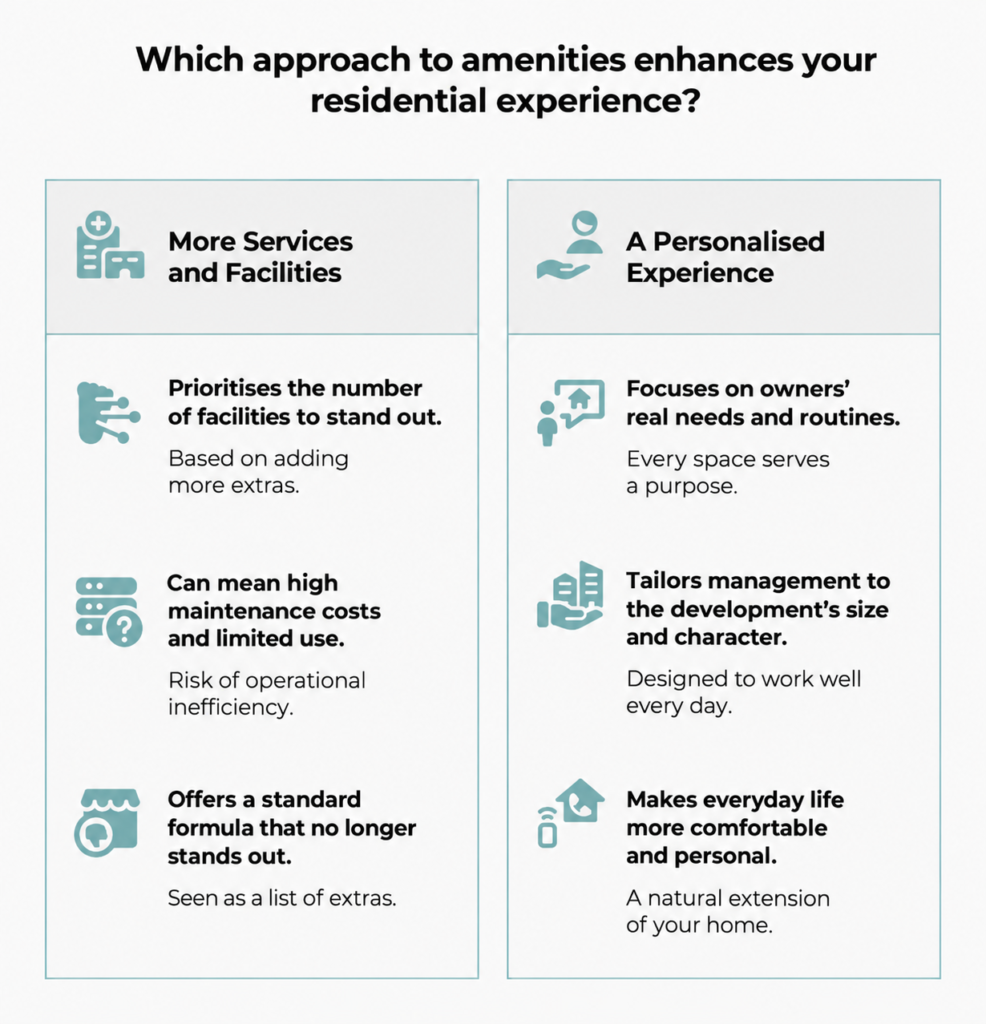
To understand what amenities mean in today’s residential market, we therefore need to stop viewing them as a list of extras. An amenity offers real value when it is well designed, used regularly and meets a specific need among the people living in the development.
An empty room filled with sophisticated equipment does not necessarily improve the residential experience. By contrast, a simple, well-located space, dedicated to an activity owners actually want and managed effectively, can become an essential part of their daily lives.
When luxury becomes standard, what comes next?
The evolution of the high-end property market has raised buyers’ expectations considerably. In international destinations such as the Costa del Sol, it is common to find developments with infinity pools, fully equipped gyms, spa areas, saunas, shared workspaces and leisure facilities.
These facilities remain relevant. The difference is that, on their own, they no longer guarantee a truly distinctive offering.
When many developments offer similar amenities, exclusivity no longer depends on their presence alone. What matters is their quality, how well they fit the project, their availability, their maintenance and, above all, the experience they create.
An infinity pool can be spectacular in a sea-facing development, where the architecture and landscape create the impression of extending the horizon. However, in another setting a heated pool designed for daily exercise might offer residents greater value.
Similarly, a coworking area can be a deciding factor in a community made up largely of international professionals who work remotely. In a development intended primarily for holiday homes, spaces focused on socialising, relaxation or personalised assistance may make more sense.
Luxury therefore cannot be designed around a universal template. What works for one community may not be right for another.
Luxury buyers do not all want the same things
One of the main mistakes when planning a development’s amenities is to treat luxury buyers as a single, uniform group.
In reality, their needs can vary significantly according to nationality, age, family circumstances, profession, habits, priorities and how they intend to use the property. A family moving to the Costa del Sol permanently will have different expectations from a couple looking for a second home to enjoy at certain times of the year.
A remote-working professional, an owner who prioritises sport, someone seeking an active social life and a buyer who places particular value on privacy and tranquillity will also have different needs.
Even how often a property is used shapes the experience. Year-round residents may value ongoing services, practical spaces and a regular programme of activities. Owners who use their property during specific periods may place greater importance on management, maintenance, security or having their home ready for their arrival.
Before deciding how many amenities a development should include, it is therefore worth asking more fundamental questions:
Who will live here? How will they use their home? Which activities are part of their routine? What level of privacy do they expect? Which services could genuinely make their lives easier?
The answers make it possible to move from a model focused on accumulating facilities to one built around the resident experience.
Every development needs a different experience
Just as no two buyers are identical, no two residential developments are the same.
Location, the number of homes, price range, architecture, landscape and the relationship with the surrounding area all influence how a residential community should be planned.
A development by the sea
In a coastal project, the experience may revolve around the landscape, natural light, views and outdoor living. Communal terraces, pools that blend visually with the horizon, relaxation areas and services that help residents enjoy the coast can take on particular importance.
Here, the aim would be to design a place that strengthens residents’ connection with the Mediterranean, rather than simply adding a swimming pool.
A golf community
A development next to a golf course creates different expectations. Equipment storage, booking services, physical recovery areas and assistance tailored to owners’ sporting routines and schedules may be especially relevant in this setting.
The experience should reflect the lifestyle offered by the location.
A project surrounded by nature
In a community set within a natural environment, well-being may centre on tranquillity, privacy and a connection with the landscape. Gardens, walking paths, yoga areas and quiet spaces may offer greater value than more eye-catching facilities.
The surroundings themselves become one of the project’s main amenities.
An urban development
In an urban location, where everyday life moves at a different pace, efficiency, connectivity, remote working, mobility and time-saving services may become more important.
A properly equipped coworking space, an efficient concierge service or communal spaces that can be booked for private use may be more useful than an extensive collection of areas used only occasionally.
The conclusion is clear: amenities should grow out of a project’s identity, rather than being added as unrelated features.
From shared spaces to personalised services
The evolution of amenities is also bringing luxury property closer to certain concepts associated with hospitality.
Buyers look beyond the mere presence of a facility. They also consider how it is managed, who looks after it, when it is available and how much easier it makes their lives.
For this reason, some communities include concierge services, owner assistance, property management or dedicated on-site staff. Others favour a more discreet approach, offering high-quality shared spaces that can be reserved for private use.
There is no single right solution.
In a large community, a permanent team coordinating services and responding to residents’ needs may make sense. In a smaller, more exclusive project, on-demand assistance, greater privacy and private access to certain spaces may be more appropriate.
The key is to adapt the operating model to the development’s size and character. An excessive level of service may be unnecessary, while insufficient support can limit the value of otherwise excellent facilities.
That is why amenity design should include consideration of how those amenities will operate in the future, right from the outset.
What makes an amenity a good experience? 5 key points
A development can offer numerous spaces without delivering a distinctive experience. Several factors need to come together for an amenity to provide value.
1. It must meet a specific need
The first consideration is usefulness. Every facility should have a clear reason for being part of the project.
A yoga area will be relevant when residents are interested in well-being and the space offers suitable conditions in terms of tranquillity, temperature and lighting. A coworking space makes sense if it provides the privacy, connectivity, acoustics and furniture needed to work comfortably.
The name of an amenity is not enough. Its design must allow it to fulfil its purpose.
2. It must be integrated into the architecture
The best amenities do not feel like features added at the end of the process. They feel like a natural extension of the project.
Orientation, views, routes through the development, natural light and the relationship with green spaces all shape how each area is experienced. When architecture and services are designed together, the community feels more cohesive and pleasant.
3. It must offer privacy when needed
Sharing services does not mean giving up privacy. In the luxury market, many owners value the ability to enjoy certain spaces exclusively, through booking systems or controlled capacity.
A private room, a wellness area available to book or a space designed for entertaining guests can offer a more valuable experience than a larger facility that is constantly busy.
4. It must be maintained over time
Luxury does not end when the homes are handed over.
An amenity retains its value when it has an appropriate plan for maintenance, management and updates. Cleanliness, equipment upkeep, attention to detail and ease of use directly influence residents’ perceptions.
A space that looks impressive at the opening but is difficult to maintain or use will quickly lose its appeal.
5. Its running costs must be manageable
More facilities can also mean higher maintenance costs. Amenities should therefore be selected responsibly, balancing exclusivity, usefulness and financial sustainability.
The quality of a development is measured by how thoughtfully its services have been chosen and designed, rather than by the length of its amenities list.
Amenities, sustainability and quality of life
The new understanding of luxury also calls for consideration of the environmental impact and efficiency of shared spaces.
Adding facilities without considering their energy consumption, water requirements, materials or maintenance costs does not represent a sustainable approach to luxury.
Amenities should be planned with the same level of responsibility as the rest of the development. This means assessing their orientation, applying energy-efficiency principles, encouraging responsible water use and choosing durable solutions.
Sustainability does not have to reduce the quality of the experience. In fact, thoughtful bioclimatic design, planting suited to the local environment and spaces that make the most of daylight and natural ventilation can improve residents’ well-being.
At RH Privé, we develop projects where the communal environment is given comparable importance to the home itself. Our vision brings together architecture, sustainability, green spaces and services to create a complete residential offering, tailored to the needs of discerning international clients.
How to assess amenities before buying a property
When considering a development, we recommend looking beyond the number of facilities advertised. It is more useful to think about how those spaces fit the future owner’s lifestyle. Consider which facilities will actually be used, how much privacy they offer, how they will be managed, what costs they involve and whether they are designed for year-round use.
It is also important to find out whether services are included, whether booking is required, whether there are restrictions on use and who will be responsible for maintenance. These details help build a picture of the residential experience beyond the marketing images.
Our team can help you compare developments and assess their homes, as well as how each community operates, the services it provides, its location and how well it meets your needs.
If you are looking for a new-build home on the Costa del Sol, we invite you to contact RH Privé Estates and discover our developments. We will help you find the project that offers the residential experience best suited to you, taking into account your lifestyle, priorities and how you want to enjoy your property.
The future lies in better experiences, rather than more amenities
The luxury residential market has reached a point where many facilities are no longer exceptional. Pools, gyms and wellness areas remain attractive, but they are no longer enough to define a development’s character on their own.
True differentiation comes when amenities have a purpose, are integrated into the architecture and respond to the people who use them.
In some communities, this may mean a permanent resident services team and hospitality-inspired services. In others, it may mean offering exceptional spaces that owners can reserve and enjoy in complete privacy.
The aim is to create the right experience for each community, rather than follow a formula.
Frequently asked questions about amenities
What are amenities in residential property?
Amenities are the facilities, communal areas and services that complement a home and improve the residential experience. They may include pools, gyms, gardens, coworking spaces, wellness areas, concierge services or owner assistance.
What are luxury amenities?
They are spaces or services designed to high standards of quality, privacy, design and service. However, their exclusive character depends on more than their cost or appearance: it also comes from their ability to meet residents’ real needs.
Which amenities are most valued?
It depends on the profile of each community. Pools, gyms, wellness areas and coworking spaces remain in high demand. Interest is also growing in personalised services, property management, concierge assistance and spaces that can be booked for private use.
Is a development better if it has more amenities?
Not necessarily. A large number of facilities may offer little benefit if they do not suit owners’ lifestyles or create disproportionately high maintenance costs. Fewer amenities that are well designed, managed and used are preferable.
Do amenities increase a property’s value?
They can make a property more attractive and help it stand out, particularly when they improve quality of life and are well maintained. However, their influence depends on their usefulness, quality, management and suitability for the development’s target market.
What is the difference between amenities and communal areas?
Communal areas are spaces shared by property owners. Amenities is a broader concept, as it can include physical facilities as well as services, activities, personalised assistance and experiences designed for the community.
How should I choose a development based on its amenities?
We recommend considering which facilities you will actually use, how they are managed, how much privacy they offer, what their maintenance costs will be and whether they suit the way you intend to use your home. Your decision should be based on the overall experience, beyond the list of features in the marketing materials.
