
When you start looking for a property, one of the most common questions is the difference between flat and apartment. Although it may seem like a simple matter of wording, in the real estate sector this distinction can influence how you interpret a listing, the expectations you create and even your final purchase decision.
The truth is that they are often used as synonyms, and this is not incorrect. However, when we analyse the market more closely, we see that they do not always mean exactly the same thing. The difference may relate to size, use, location or even the commercial positioning of the property.
If you are thinking about buying, investing or simply understanding the market better, this post will give you a clear and professional view of the difference between flat and apartment.
At RH Privé Estates, with more than 30 years of experience in the sector, we support international clients like you in finding homes that match their lifestyle, always with transparency, trust and fully personalised advice.
What is a flat and how it is understood in Spain
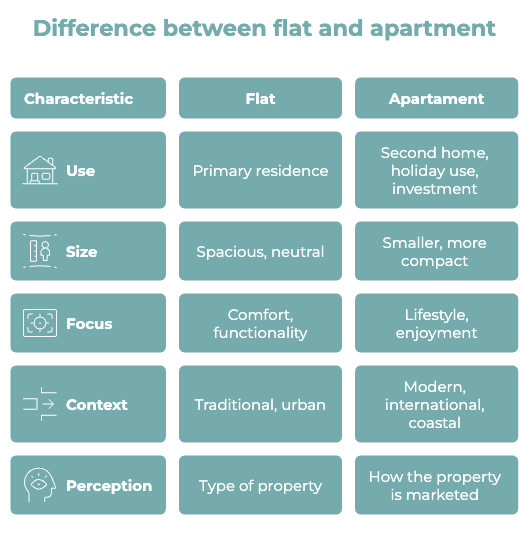
When we talk about a flat, we generally refer to a home located within a shared residential building. It is the most common term in Spain and the one you will probably use naturally when thinking about a primary residence.
A flat can vary in size, quality and style. It may be a spacious family home, a renovated property in a city centre or even a luxury residence with sea views. For this reason, it is a broad and neutral concept.
In addition, the term flat is usually linked to the idea of a main residence. In other words, a place where you live on a regular basis, carry out your daily life and look for comfort and functionality.
What is an apartment and what makes it different
When analysing the difference between flat and apartment, the term apartment also describes a property within a building, but it usually carries a slightly different nuance. In many cases, it is associated with smaller, more practical homes, with compact layouts or designed for more flexible use.
It is common to associate the word apartment with a second home, a holiday property or an investment. It is also widely used in modern developments and international markets.
However, there is something important to keep in mind: an apartment does not have to be small or basic. On the Costa del Sol, for example, there are luxury apartments with large terraces, sea views, exclusive amenities and contemporary designs focused on wellbeing.
Therefore, more than size, what changes is the perception and positioning of the property.
The difference between flat and apartment in practice
So, what is the real difference between flat and apartment? There is no strict rule, but there are several key points that can help you understand it better.
On one hand, the term flat is more general and traditional. It describes a property without adding commercial nuance. On the other hand, apartment is often used to convey a specific lifestyle, more linked to leisure, investment or modern design.
Context also matters. In traditional urban areas, it is more common to speak about flats. In coastal areas or international markets such as the Costa del Sol, the term apartment is used much more frequently.
In short, a flat defines the type of property, while an apartment often reflects how that property is marketed.
How this difference affects you when buying
Understanding the difference between flat and apartment is essential when searching for a property. The name can give you clues about its positioning, but it does not define its real value.
If you are looking for a home to live in all year round, you may feel more connected to the concept of a flat. If you are searching for a second home, a property to enjoy during certain periods or an investment, apartments may be more appealing.
However, when considering the difference between flat and apartment, the key point is not to rely only on the label.
Always analyse factors such as location, quality, layout, orientation and community features. These elements are what truly determine whether a property is right for you.
At RH Privé Estates, this is exactly how we work: We listen to your needs and help you find the property that genuinely fits you. Our team provides multilingual advice, access to exclusive properties and full support throughout the entire process.
If you are considering buying on the Costa del Sol, we invite you to contact us and discover homes that go beyond the conventional.
Flat or apartment on the Costa del Sol
On the Costa del Sol, the term apartment is widely used, especially in new developments and properties aimed at international buyers.
Here, the concept of apartment is closely linked to a lifestyle: Sea views, large terraces, communal areas, design and sustainability all play a key role. It reflects a way of living that goes beyond the interior space.
This approach reflects the philosophy of RH Privé, where luxury is combined with sustainability, innovation and attention to detail, creating homes designed to offer a complete living experience.
For this reason, when you search for property in this area, you will see that the term apartment does not imply something basic, quite the opposite.
What you should really consider
Beyond whether it is called a flat or an apartment, there are decisive factors to consider. Project quality, location, how well it fits your lifestyle and sustainability are key elements. Today, a property is not just a place to live, but an investment in wellbeing and quality of life.
That is why expert advice makes a real difference.
FAQs about the difference between flat and apartment
Are flat and apartment the same?
Not exactly, although they are often used as synonyms. The difference between flat and apartment lies more in usage and commercial perception.
Is an apartment smaller?
Not necessarily. There are large luxury apartments and smaller flats.
Which term is more common in Spain?
Flat is more widely used, but apartment is very common in tourist areas and modern developments.
Which one should I choose?
It depends on your needs. The most important thing is to evaluate the property itself, not just its name.
